
Yes, you can sell a house with unpermitted work. The work does not block a sale by itself. What matters is that you disclose what you know, and that you choose a route that fits your timeline: legalize the work, price it in, or sell to a buyer who takes the property as it stands. In Texas, the state’s seller’s disclosure notice asks about this directly, so the question is never whether to be honest, only how to sell well once you are.
TL;DR
- You can sell with unpermitted work, including as-is, but a seller who knows about it must disclose it. Selling as-is does not erase that duty.
- Financed buyers are where the trouble starts: appraisals, lender approval and insurance can all be affected by unpermitted square footage or systems.
- Your three routes are retroactive permits, a price adjustment or credit, or a sale as-is to a buyer who accepts the risk.
- A direct cash buyer can remove the lender and appraisal step, which is often the fastest way out when time or money is tight.
- Check what was permitted before you list. Your city’s permit records usually answer the question in minutes.
Table of Contents
- What counts as unpermitted work
- How to find out whether your work was permitted
- What you must disclose in Texas
- How unpermitted work affects value, financing and insurance
- Your three options as a seller
- Which route fits your situation
- What a traditional listing looks like with unpermitted work
- Selling to a cash buyer when the work is unpermitted
- Steps to take before you sell
- FAQ
- Sources
What counts as unpermitted work
Unpermitted work is any construction, remodel or system change that needed a permit and never got one, or got one that was never closed out. Typical examples are a garage turned into a bedroom, an enclosed patio, a bathroom added without inspection, a water heater swapped by a handyman, or electrical and plumbing rerouted during a remodel.
Not everything needs a permit. Nolo explains that most construction or remodeling projects need one for safety, with exceptions such as small detached buildings, some fences, driveways, window replacements, painting and flooring. Redfin makes the same split in plainer terms: cosmetic updates like paint, flooring, cabinets or light fixtures typically need no permit, while structural changes and electrical or plumbing work usually do.
The rules are local. Philadelphia’s own permit guide, for example, lists additions, demolition, and updated electrical, plumbing or HVAC systems as work that requires permits. Your city or county sets the exact line, so check yours.
Two situations catch sellers off guard:
- Work done by a previous owner. You may not have known about it when you bought. Once you do know, the duty to disclose applies to you.
- A permit that was pulled but never finished. An issued permit is not the same as a completed one. Real estate professionals advise asking whether all required inspections happened and whether final approval was issued, then matching the permit’s description to what is physically in the house.
How to find out whether your work was permitted
Start with the records, not your memory.
- Search the permit history. Building departments usually let you search existing permits by address, often online. In Edinburg, the City publishes a permits and inspections page that points to its online portal for building permits and inspection status.
- Compare the permit to the house. A permit for a 12-by-12 deck does not cover the covered patio you later built around it. Square footage, number of bedrooms and added bathrooms should match the paperwork.
- Look for open or unfinished permits. A permit with no final sign-off still counts as a problem a buyer’s inspector or lender may flag.
- Gather what you have. Contractor invoices, photos from the time of the work and any prior inspection reports help you explain what was done and when.
Nolo notes that a seller is not required to notify the building department simply by selling as-is, which means you can look into your records first and decide on a route afterward. If the situation is complicated, a Texas real estate attorney can tell you what applies to your exact property.
What you must disclose in Texas
In Texas, the seller’s disclosure notice is set out in Property Code Section 5.008. Among the items it asks about are room additions, structural modifications or other alterations and repairs made without necessary permits or not in compliance with building codes in effect at that time. It must be delivered to the buyer on or before the effective date of the contract.
The broader principle holds across the country. Once you know about unpermitted construction, you must inform potential buyers, usually on a state-specific disclosure form, and full disclosure protects you from legal liability. Answering “no” or leaving the field blank when you know better can be treated as misrepresentation that creates liability after closing.
A few practical points:
- As-is does not cancel disclosure. Selling as-is tells buyers you will not negotiate on condition. It generally does not waive the duty to disclose known material facts, and it never protects against active concealment.
- Disclose what you know, not what you suspect. Sellers are generally on the hook for problems they knew about. Write down what you know, factually and briefly.
- Keep copies. Hold on to the signed disclosure and any permit records with your closing documents.
How long a seller stays exposed depends on the state and the claim. Minnesota, for instance, gives buyers two years after closing to bring a disclosure action, and liability turns on whether the seller knew. Texas has its own limits, so ask a Texas attorney about your specific timeline rather than relying on another state’s number.
How unpermitted work affects value, financing and insurance
The legal duty is the easy part. The harder part is how a financed buyer’s team reacts.
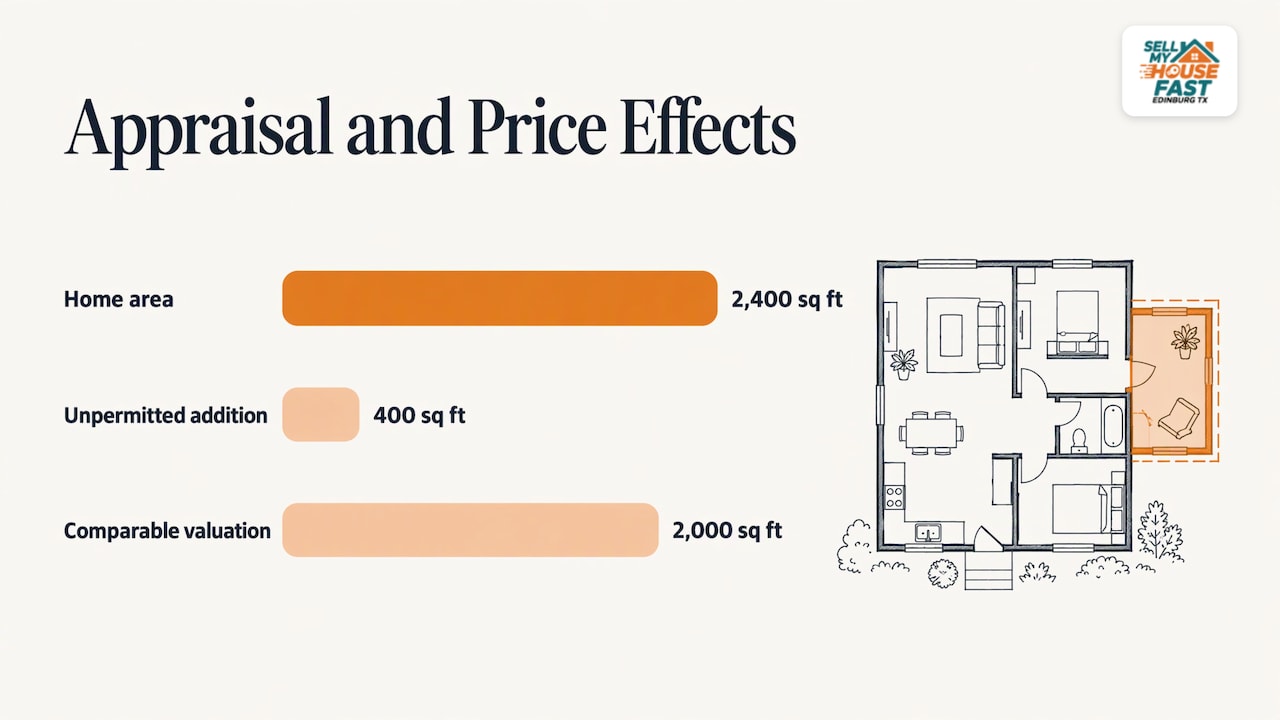
Appraisal. Appraisers may leave unpermitted square footage out of their valuation. Redfin gives the example of a 2,400-square-foot home with a 400-square-foot unpermitted addition that might be valued like a 2,000-square-foot comparable.
Lending. If the issue surfaces before closing, it may cause the appraisal to come in lower than expected, which could stop the sale, and lenders may change or rescind loan offers. Buyers who need a loan should understand what happens to a mortgage application after submission, because underwriting is where a permit gap tends to appear.
Insurance. Insurers may refuse to cover unpermitted spaces or deny related claims. A buyer who cannot get a policy often cannot close.
Price. Homes with unpermitted work may sell for less. One agent-side source puts typical discounts at 10% to 20% of the value the improvement would add if permitted, depending on severity and market. Treat that as a rough guide, not a rule for your house.
Safety. Permits exist so work gets inspected before it is hidden behind walls. Concerns include electrical and fire separation and, in conversions, egress. Unpermitted electrical or gas work deserves a licensed professional’s look whether or not you sell.
Your three options as a seller
| Option | What it involves | Best when | Watch out for |
|---|---|---|---|
| Get retroactive permits | Apply to the city for after-the-fact approval, pass inspections, fix whatever fails | The work is small, you have time and cash, and you plan to list on the open market | The city may require opening walls or bringing work up to current code |
| Price it in or offer a credit | Disclose, then reduce the price or credit the buyer at the inspection stage | The gap is minor and buyers are paying cash or the lender is comfortable | Financed buyers can still be stopped by the appraisal or insurer |
| Sell as-is to a buyer who accepts the risk | Full disclosure, no repairs, no permit process | Time, money or condition make fixing impractical | Fewer buyers qualify, so choose a buyer that does not depend on a lender |
Option 1: Legalize the work
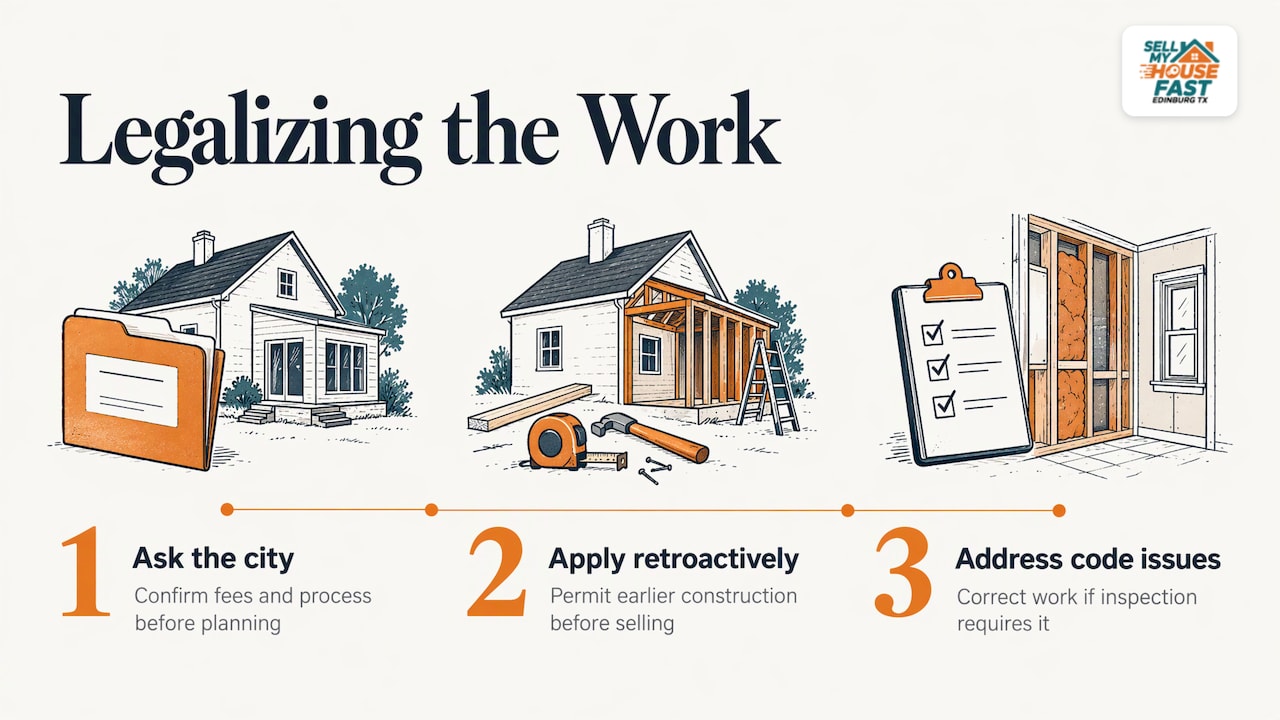
Sellers can obtain a permit for the earlier construction before selling, depending on their situation and costs. One source reports retroactive permitting typically runs $500 to $5,000, with timelines from about two weeks to several months for complex additions needing engineering or multiple trade inspections. Those are broad figures, so ask your city for its own fee schedule and process before you plan around them.
The tradeoff is that you are inviting inspection. If the work does not meet code, you may be asked to correct it, and that can cost more than the permit.
Option 2: Disclose and adjust the price
This keeps the house on the market with honest paperwork and a price that reflects the gap. It works best when the unpermitted item is small and the buyers in your price range are not heavily dependent on conventional financing. If the issue turns up during the buyer’s inspection, a credit or price adjustment is a common way to keep the deal alive.
Option 3: Sell as-is to a buyer who accepts the risk
Some buyers purchase homes knowing the work was unpermitted and plan to deal with it themselves. Because they are not waiting on a lender’s appraisal or an insurer’s approval, the issues that sink financed sales matter much less. We cover how that kind of sale works in our guide to selling a house as-is and what you net.
Which route fits your situation
Use these questions to decide.
- How big is the work? A water heater or a small deck is a different conversation from an enclosed garage or an added bedroom.
- How much time do you have? Permits, inspections and corrections can run from weeks to months. If you face a move, a probate timeline or a payment deadline, that matters.
- Can you pay for corrections? The permit fee may be the smallest cost. If inspectors require changes, budget for those.
- Is the house also dealing with other issues? Unpermitted work often comes with other repair needs. Our pages on code violations and foundation problems in Texas explain how those combine with a sale.
- Did you inherit the house? Heirs often discover unpermitted work they never knew about. The disclosure duty depends on what you know, so document what you learn and when.
- Has the house already sat on the market? Listings with unresolved permit questions can stall. Our guide on why a house won’t sell covers the other common reasons.
What a traditional listing looks like with unpermitted work
On a standard listing, you pay agent commissions, prepare the home, and wait for a buyer whose lender approves. If that buyer’s appraiser excludes the unpermitted square footage, the number may come in below the contract price. The deal then needs a renegotiation, a cash gap from the buyer, or a new buyer. Each round costs days.
None of this makes a listing the wrong choice. For a small, well documented permit gap, it can work fine. If you are weighing a for-sale-by-owner route to avoid commissions, our piece on selling without a realtor lays out what you take on yourself, including disclosure paperwork.
Our perspective
We buy houses in Edinburg, TX in whatever condition they are in, and unpermitted work is one of the most common things homeowners worry about before they call us. Usually the worry is bigger than the problem. An enclosed carport, a bathroom someone added years ago, an addition the previous owner built: these are normal in older and inherited homes.
Our approach is to look at the house as it stands, make an offer based on local market value, and handle the paperwork and closing ourselves. You do not have to pull permits, tear anything out, clean up or hire a contractor first. There are no agent commissions or fees on our side, and you pick the closing timeline that works for you, with closing possible in as little as seven days.
What we ask in return is simple honesty about what you know. Tell us about the work and when it was done, and we will talk through it plainly. We would rather you understand your situation completely than rush into a decision.
Wally
Selling to a cash buyer when the work is unpermitted
If the permit gap is holding up a sale, or you do not want to spend money and months to fix it, a direct sale is worth a conversation.
We buy houses and land in Edinburg, TX for cash. That includes inherited, vacant, outdated and distressed properties, and homes with work no one ever permitted. We make an offer based on local market value, with no repairs or cleanup required, no agent, and no commissions or fees. You choose the closing date, and we handle the paperwork and the closing process.

If you own a house in Edinburg and want to know what an as-is sale would look like, request a cash offer or start from our Edinburg home-selling page. If the property is vacant land, see how we buy land in Edinburg.
Steps to take before you sell
- Pull your permit history from the city’s online portal or building department.
- Walk the house with the records in hand. Note every addition, conversion, and system replacement that does not appear.
- Collect documentation: invoices, photos, prior inspection reports, and anything the previous owner left.
- Complete the Texas seller’s disclosure notice truthfully. Answer from what you know, not what is convenient.
- Decide your route using the table above: legalize, adjust the price, or sell as-is.
- Talk to a Texas real estate attorney if you are unsure what your disclosure should say or if the work involves safety systems or a significant addition.
- Get offers that match your timeline. Compare how each buyer type handles financing, inspection and closing.
FAQ
Can I sell a house with unpermitted work in Texas?
Yes. Texas does not bar the sale, but the seller’s disclosure notice asks about alterations made without necessary permits, and you must answer based on what you know. Pairing honest disclosure with a realistic price or a buyer who accepts the property as-is is the straightforward path.
Do I have to tell buyers if I’m selling as-is?
Yes, if you know about the work. Selling as-is limits buyers’ ability to demand repairs or price cuts, but it usually does not remove the duty to disclose known material facts. Concealing the work on purpose can create legal exposure after closing.
What happens if an appraiser finds unpermitted work?
The appraiser may leave unpermitted square footage out of the valuation, which can lower the appraised value below the contract price. A lender may then reduce or pull funding, and the sale can stall until the price, the cash down payment or the buyer changes.
Can I avoid the permit problem by selling to a cash buyer?
A cash buyer does not depend on a lender’s appraisal, so the most common financing obstacle does not apply. You still disclose what you know. The difference is that the buyer evaluates the work directly and prices it into the offer rather than needing outside approvals.
How long am I liable after the sale?
It depends on the state and the type of claim. Minnesota allows two years after closing for disclosure actions, for example. For Texas, ask a local real estate attorney about the limits that apply to your sale.
Sources
- Discovering Unpermitted Construction When Selling Your Home (Nolo)
- Things to Know Before Buying a House with Unpermitted Additions (Redfin)
- Selling a House With Unpermitted Work (Redfin)
- Atlas: Permit Information and More at your Fingertips (City of Philadelphia)
- How to Verify Permits, Square Footage and Completed Work
- Texas Property Code Section 5.008
- City of Edinburg Permits and Inspections
- How to Sell a House With Unpermitted Additions or Renovations
- Selling With Unpermitted Work: Disclosure and Options
- Discovery of Hidden Defects in Your Newly Purchased Home
- What to do when buying a house with unpermitted work (Rocket Mortgage)
- Selling a House With Unpermitted Work: What Happens Now?
- Buying a House With Unpermitted Work in California